
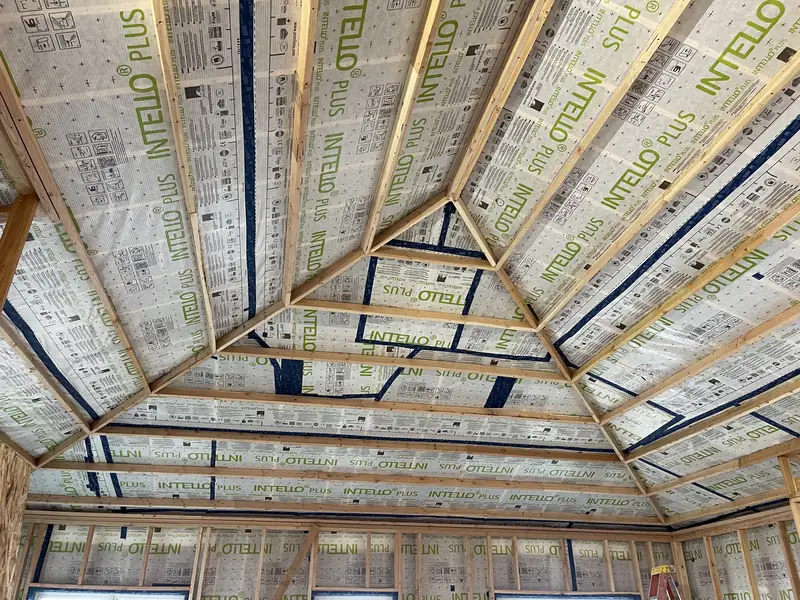
Air leaks can have a huge effect on a house and the people in it. Leaky houses are drafty, cost more to heat, and carry moisture into walls and attics, where it can cause mold and rot. That's why modern building puts so much effort into air sealing.
But once a house is tight, fresh air has to be planned instead of left to chance.
Seal first
Air sealing works best when the air barrier is continuous: a single unbroken layer that wraps the whole house. The trouble spots are the transitions, like where walls meet floors, where the house meets the foundation, and every pipe, wire, and vent that passes through. Rim joists, the framing around the edge of each floor, are a classic leak that's easy to seal during construction or a basement finish.
Then ventilate on purpose
Once a house is sealed tight, fresh air should come from a designed ventilation system instead of random leaks. That's a job for a mechanical designer or HVAC contractor, and it's worth planning early in any addition or major remodel so the framing leaves room for ducts.
New doesn't mean clean
New homes can have surprisingly poor indoor air. New finishes, adhesives, cabinets, and flooring release chemicals called VOCs, including formaldehyde, and levels are usually highest when everything is brand new. A few things help:
- Ventilate hard at first. The EPA advises bringing in extra fresh air for the first few months after new construction or a major remodel.
- Pick low-emitting finishes and adhesives.
- Fix moisture, not just mold. Mold is the visible sign of a moisture problem. Cleaning it without fixing the source means it comes back.