
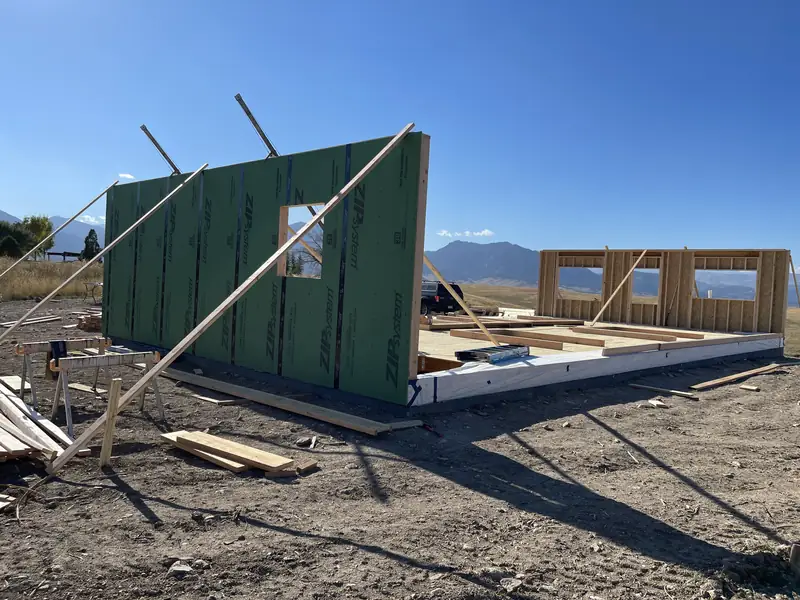
A house in Superior or Boulder faces different conditions than one in Seattle or Atlanta. Three of them come up on almost every Front Range project.
1. Dry air and cold sheathing
Winters here are cold and very dry. That sounds easy on a house, but there's a catch: in a typical wall where all the insulation sits between the studs, the wood sheathing on the outside stays cold for much of the winter. Warm indoor air that leaks into the wall can drop its moisture on that cold wood during the coldest months.
Two things help:
- Air sealing, so moist indoor air can't get into the wall in the first place.
- Insulation on the outside of the sheathing, which keeps the wood warmer. Builders often pair it with a small vented air gap behind the siding, called a rainscreen, so the wall can dry out. A saying among builders sums it up: "if it doesn't dry, it's going to die."
2. Radon
Boulder, Jefferson, Adams, and Denver counties, along with most of Colorado, are in the EPA's highest radon zone. Broomfield didn't exist as a county when the map was drawn, but it was formed from land in those highest-zone counties. Radon is an invisible, odorless gas that comes up from the soil. The EPA recommends testing every home and fixing it when levels reach 4 picocuries per liter or more.
When a new slab is poured, radon-resistant building is fairly simple: a layer of gravel under the slab, a sealed plastic sheet over the gravel, sealed cracks and openings in the slab, and a vent pipe that runs up through the roof, with room to add a fan later if testing calls for one. Then test after moving in.
For an existing basement, test before finishing it. If the level is high, have a certified radon mitigation contractor fix it before the walls go up.
3. Wildfire
After the Marshall Fire, many Front Range homeowners are thinking about embers. Research from the Insurance Institute for Business & Home Safety identifies wind-blown embers as the main cause of homes catching fire in wildfires. Common ways to harden a house include:
- a Class A rated roof
- noncombustible gutters and downspouts
- vents covered with noncombustible metal mesh of 1/8 inch or finer, which cuts down how many embers get in
- a noncombustible zone in the first 5 feet around the house, with no bark mulch, firewood, or shrubs against the wall
- noncombustible fences close to the house
- at least 6 inches of noncombustible material, like concrete, stucco, fiber cement, or metal flashing, at the base of every exterior wall
There's a tradeoff worth knowing: the vents that let a rainscreen dry out can also let embers in, so they need ember-resistant mesh.
Wildfire building requirements vary by town and by lot, so check with your local building department before you start a project.