
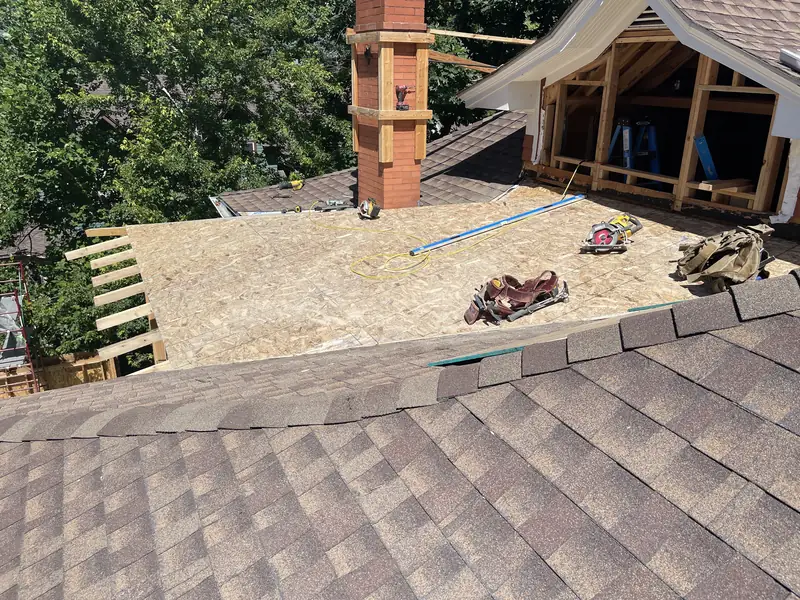
Look at any spot on a house where the bottom edge of a roof runs into a wall that keeps going, like a garage roof meeting a two-story wall, or a porch roof meeting the side of the house. Right where the roof edge meets the wall, there should be a small piece of bent metal angled outward. That's a kick-out flashing, sometimes called a diverter.
What it does
Rain running down that roof travels along the wall in a channel of step flashing. At the bottom of the roof, it needs somewhere to go. The kick-out turns that water outward, into the gutter or away from the wall.
Without one, all the water from that section of roof dumps right against the siding at the same spot, every storm, and can soak into the wall behind it. Because the damage is hidden behind siding, it can go on for years. By the time there's a stain inside, a soft spot, or peeling paint, the sheathing and framing are often rotted.
Why it matters
The International Residential Code, the model code most Colorado towns build their rules on, requires a diverter where the eave of a sloped roof meets a sidewall. It also sets a minimum thickness for metal flashing. InterNACHI's guidance for home inspectors flags missing kick-outs, which let roof runoff soak the wall instead of draining into the gutter. Local rules can vary, so check with your building department.
The usual problems:
- No kick-out at all.
- House wrap tucked behind the step flashing instead of lapped over it, which lets water get behind the flashing.
- Gaps between trades. The roofer, sider, and gutter installer each assume someone else handled it.
Check your own house
You can usually spot this from the driveway. Find each place where a roof edge stops against a wall, and look for:
- a bent metal piece angled away from the wall at the bottom of the roof
- staining, swelling, or peeling paint on the siding below that spot
- soft or stained drywall on the inside of that wall
If the metal piece is missing, it's worth having someone take a closer look. Kick-outs are easiest to get right when a new roof meets an existing wall, like a covered porch, a covered deck, or an addition, so that's the moment to make sure one goes in.